Brief
A revamped visual identity and environmental design system for the Corvallis Transit System.
In order to most effectively serve its users, the CTS must be clear and concise in its methods of conveying information regarding schedules, routes, buses, and any other information relating to the system. With a bold and unified visual identity that stands out in the world and enables users to navigate throughout their journey without confusion, the CTS is able to provide users with the reliable bus services they deserve.
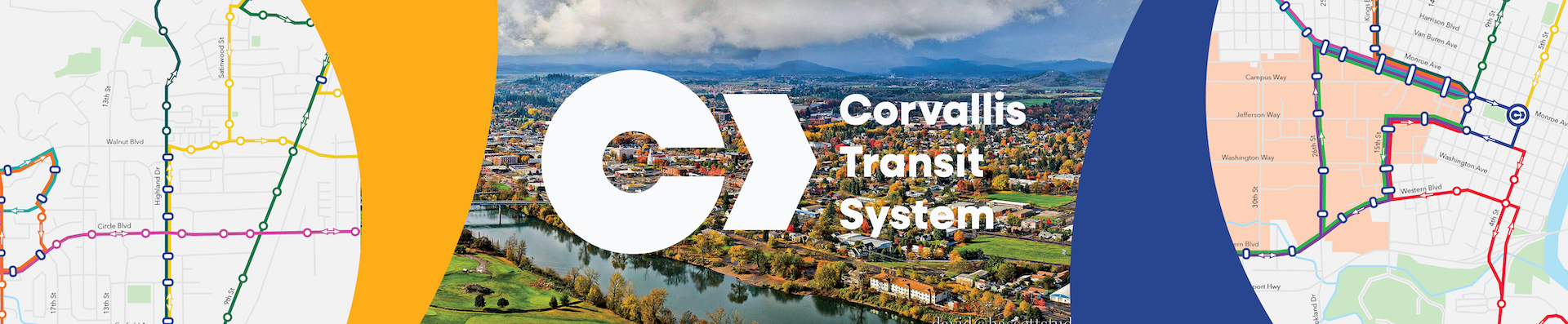
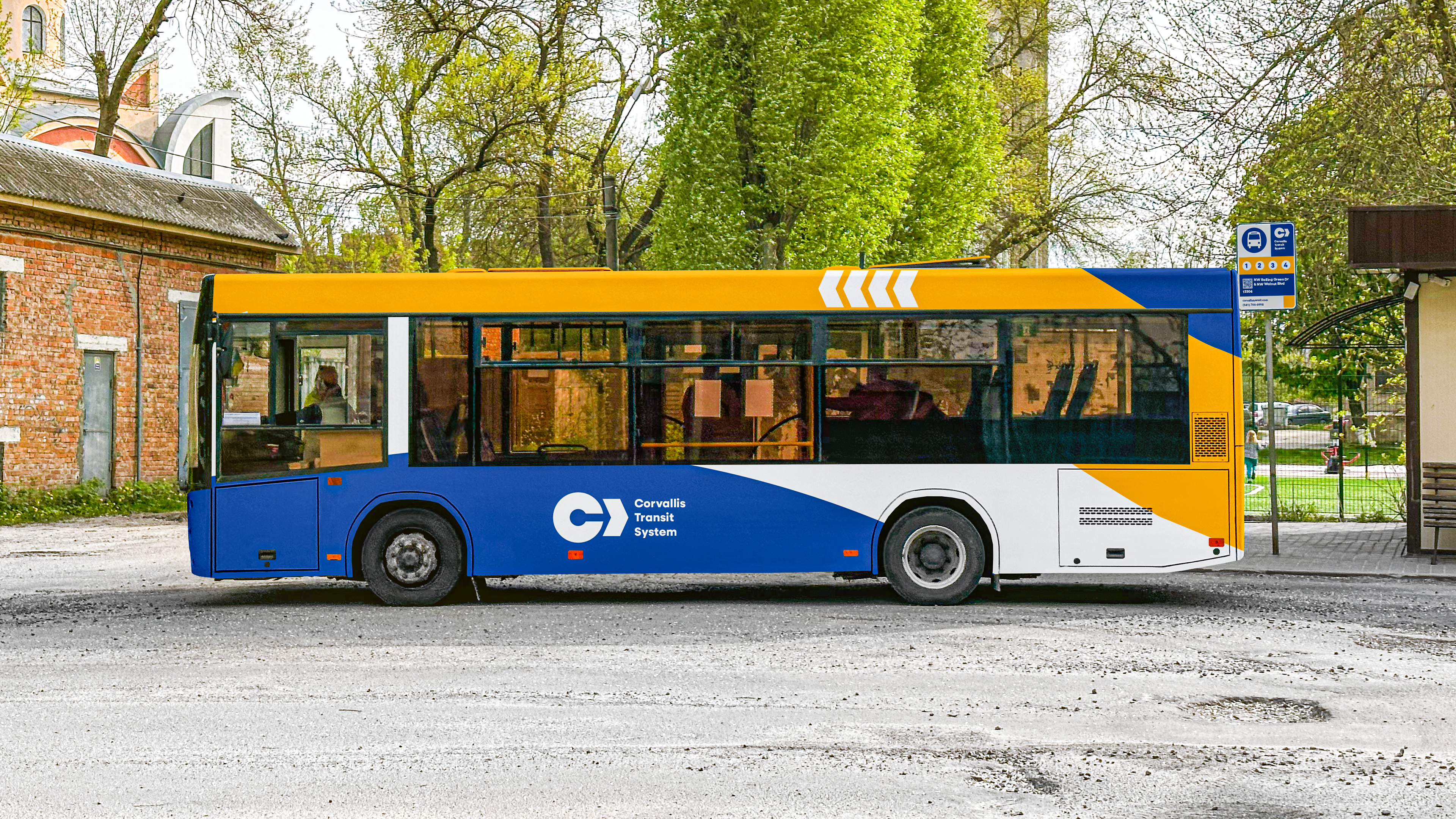
Based off of data found in user research, the CTS struggles to smoothly convey information to users. To solve this, a new, distinct visual identity was created, revamping the signage and wayfinding found throughout the system - maps, bus signs, digital information. This new identity and communication system enables users to access the information they need to move throughout Corvallis smoothly.
Process
Research for this project began with conducting visual ethnography of the current system, analyzing its current strengths and weaknesses. Surveys were also conducted, learning what current users felt was currently working, what wasn't, and where improvements could be made.
With data collected from this research, a project plan was created - creating design solutions that targeted the current issues that users faced.
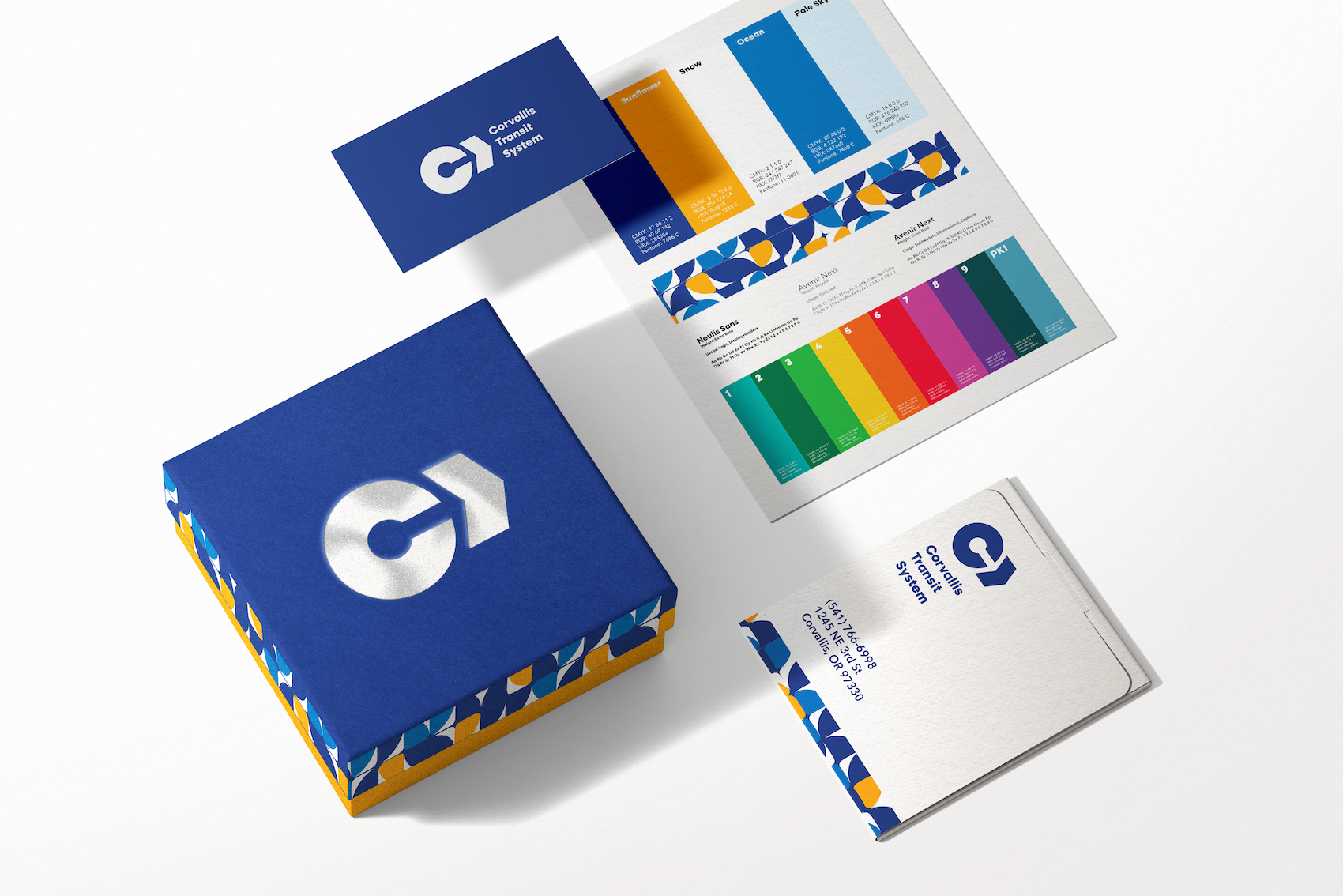
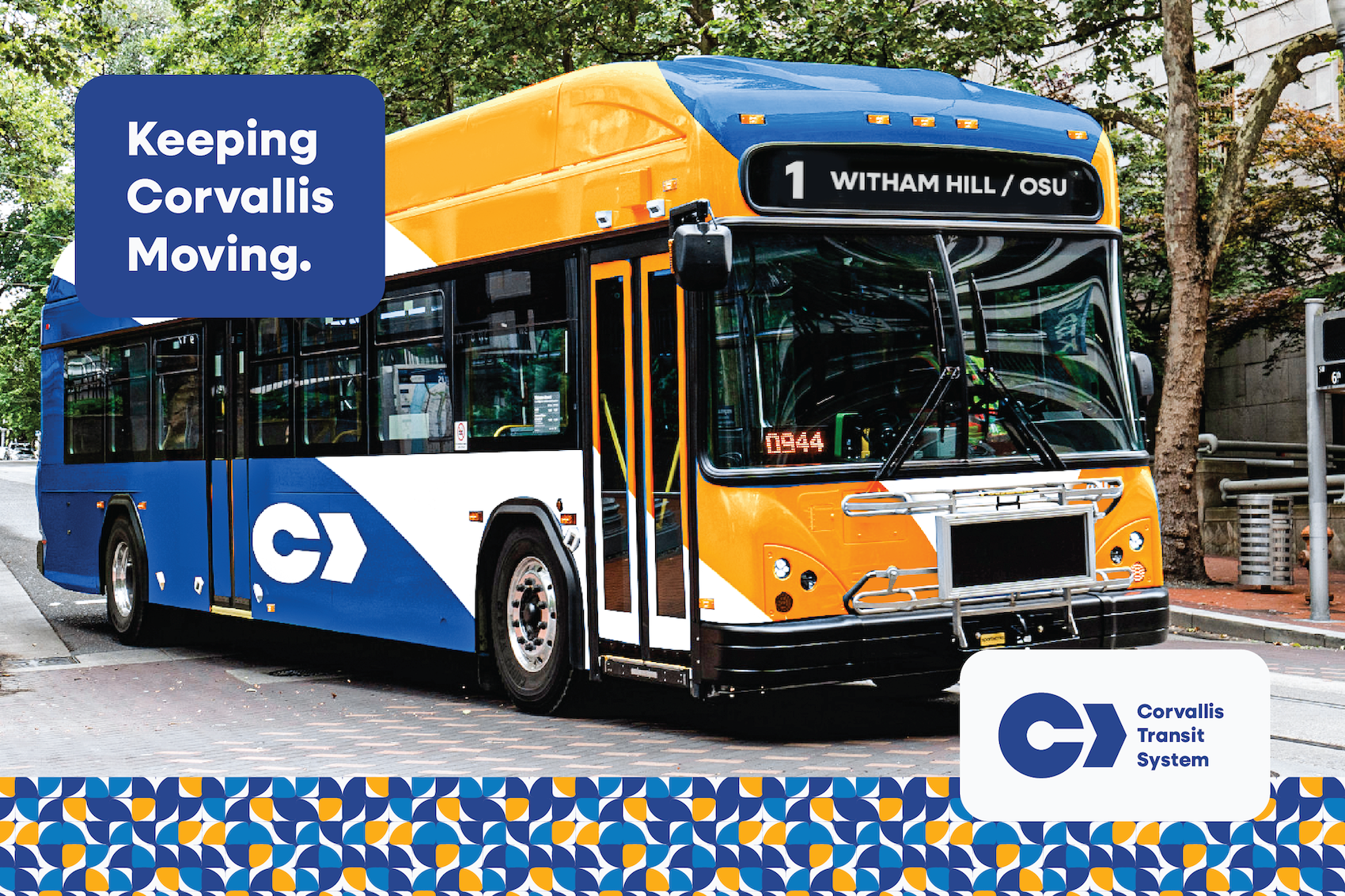
The design process began with creating a new brand identity for the Corvallis Transit System. A new logo, type system, color palette, and brand standards were developed. This new identity serves to unify the brand as well as be easily identifiable when spotted throughout Corvallis - assisting users in navigating the system.
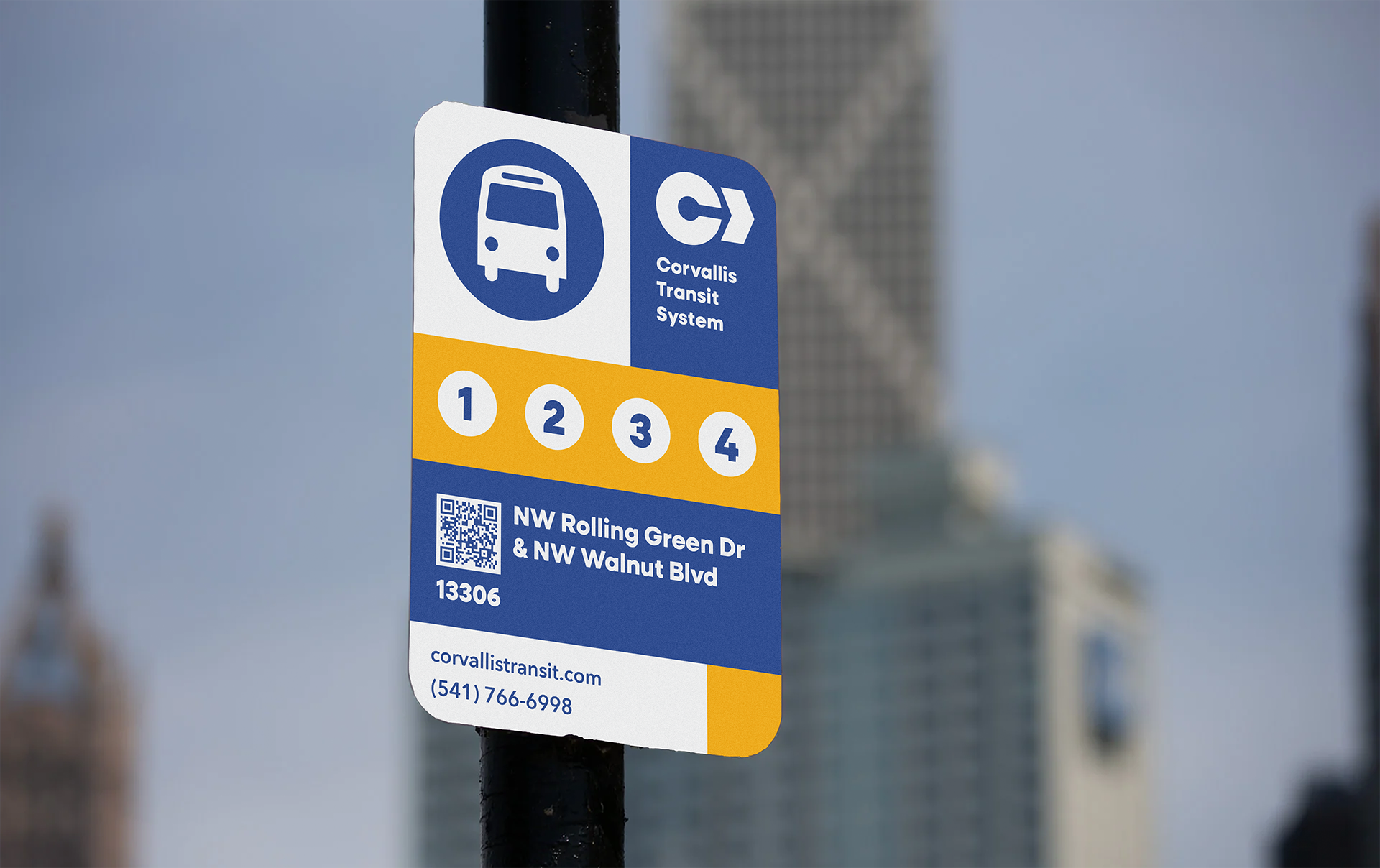
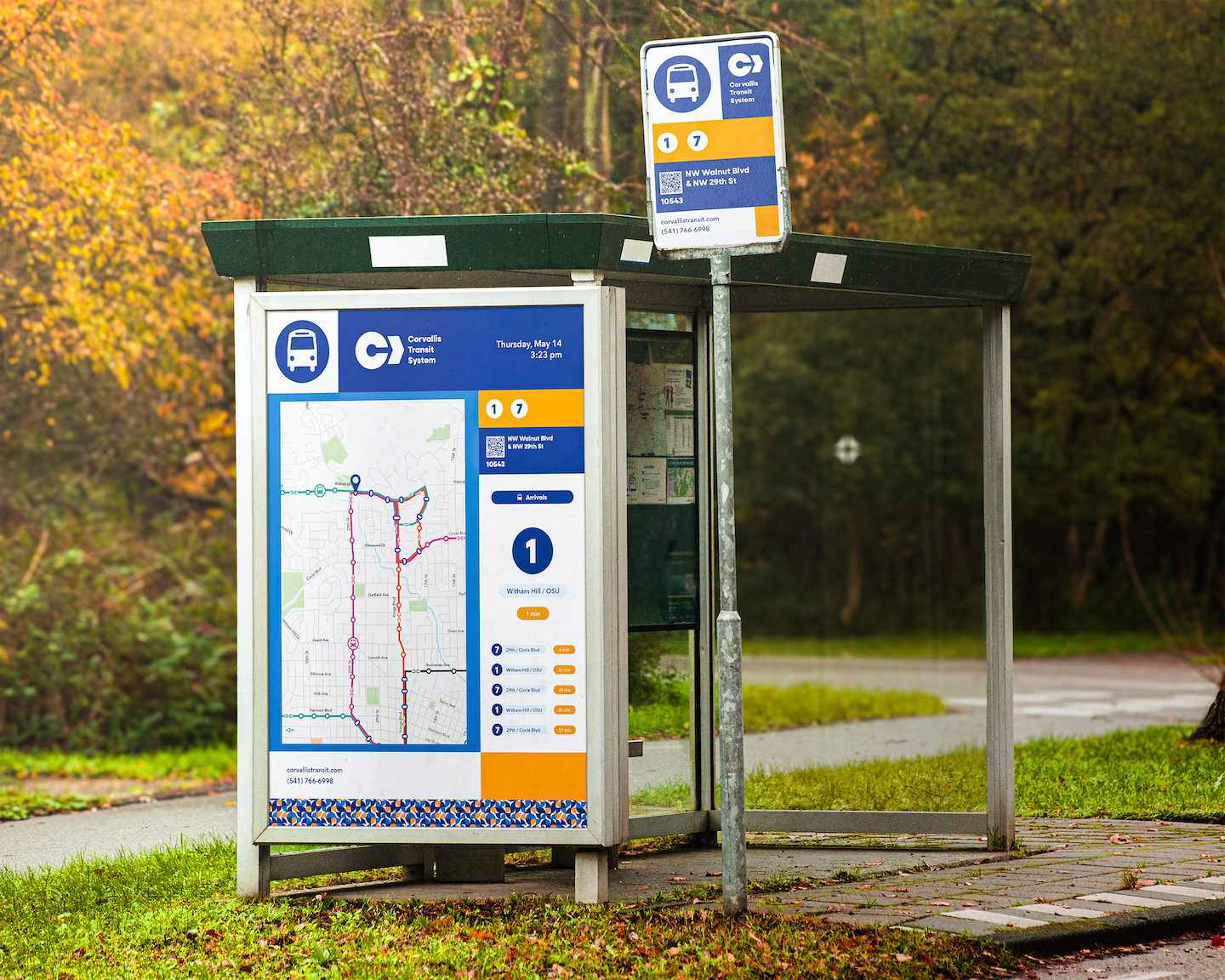
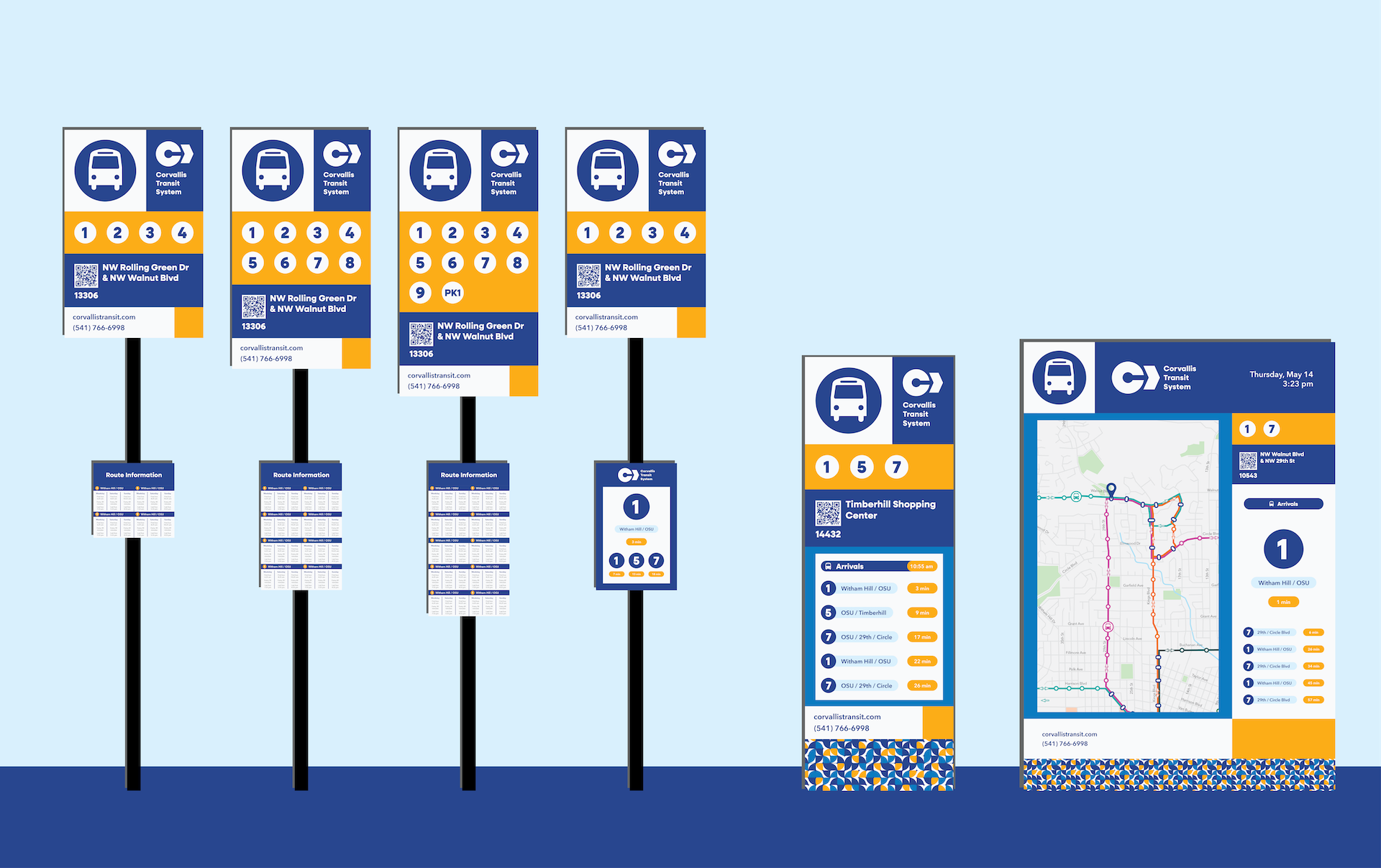
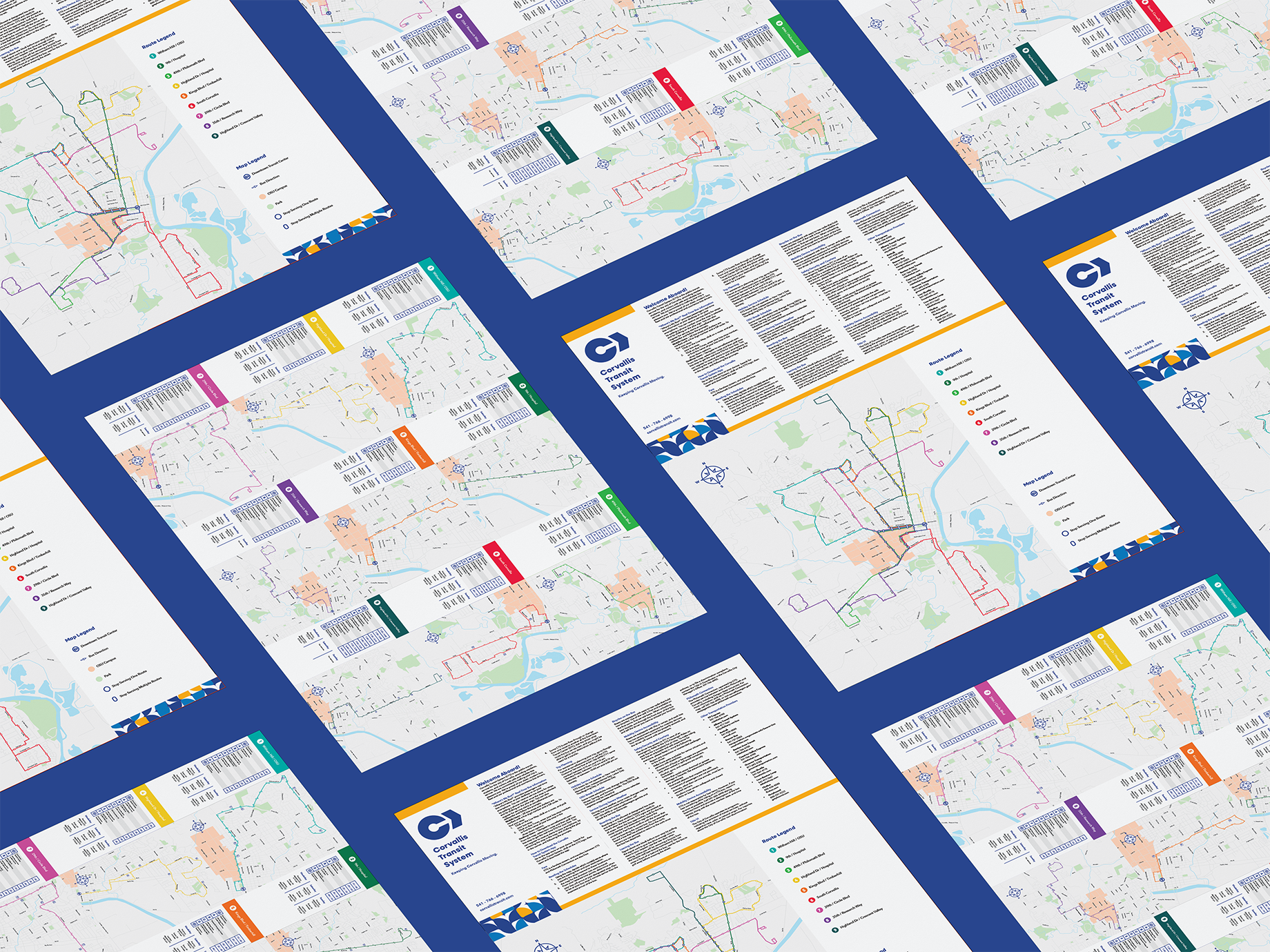
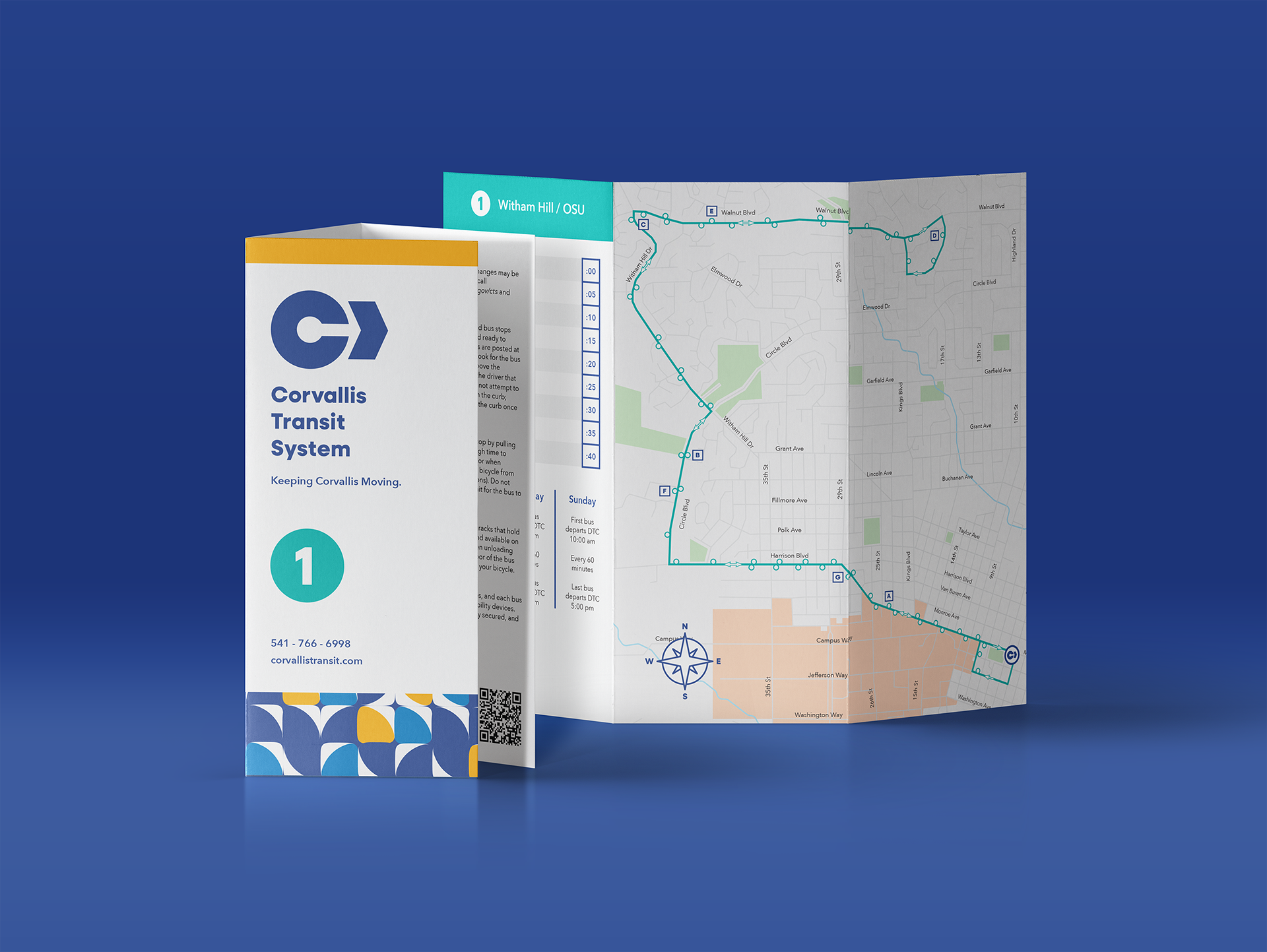
With a brand identity established, other necessary design and wayfinding components were created, including signage for bus stops, stations, and route and system map brochures.
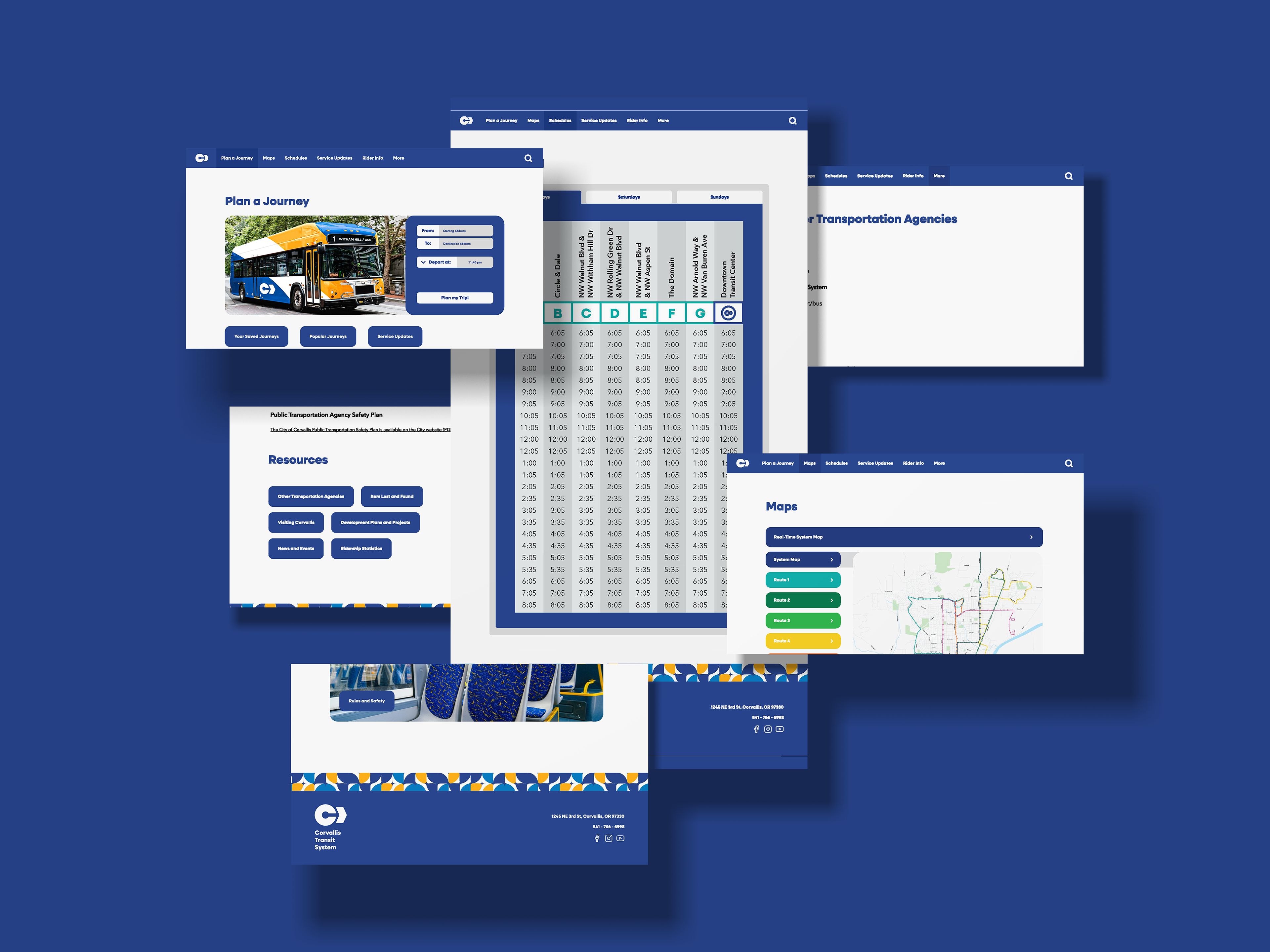
As identified in research, a major pain point that users experienced was accessing information about the system, such as routes and schedules, digitally. A new website was developed, expanding on the information that users were able to access, allowing them to efficiently access everything they need to navigate the system.